
High-altitude tour Gross Titlis 3238 m
Contents
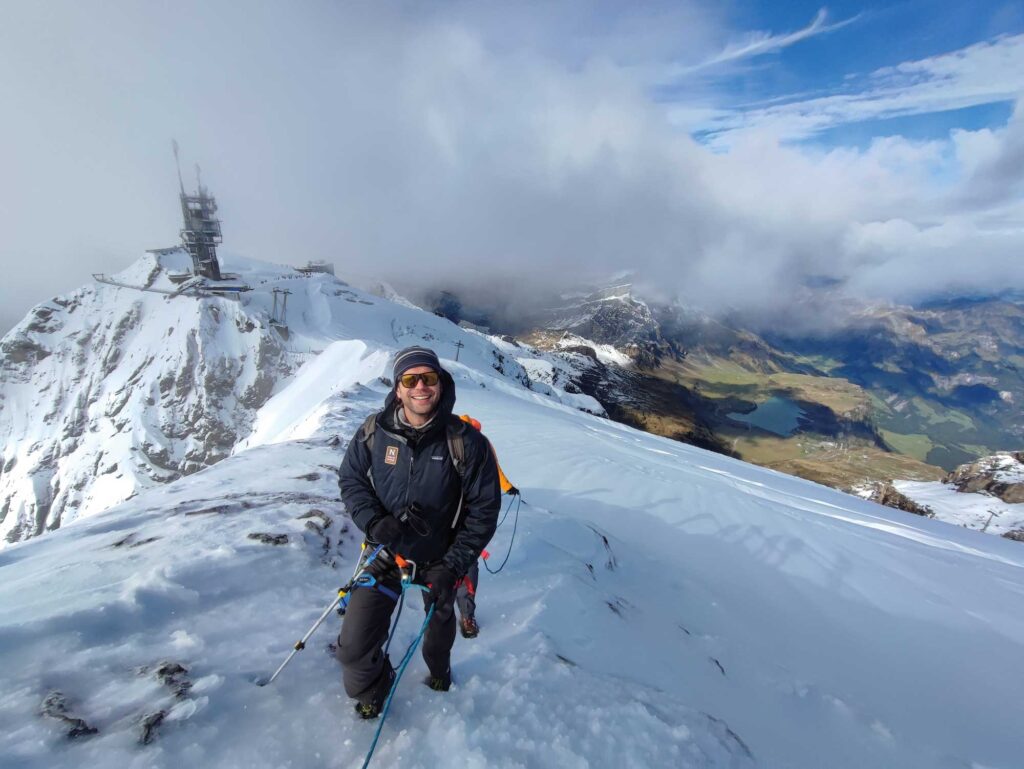
The Gross Titlis is Engelberg's landmark and, for many mountaineers, the region's first 3,000-metre peak. The tour combines an impressive glacier landscape with a relatively simple summit objective and offers magnificent views over the Uri Alps, the Engelberg Valley, and the Bernese Oberland.
Despite its proximity to the mountain railways, the ascent remains a high-alpine tour. In particular, crossing the Galtiberggletscher glacier requires good conditions and experience in dealing with crevassed areas.
Route description
The classic normal route starts at the Stand mountain station. Initially, the path leads over the ski slopes and then onto the Galtiberggletscher. You slowly gain altitude through a labyrinth of crevasses and snow bridges, reaching the upper glacier area.
The summit ascent is straightforward and leads over scree and firn to the highest point in the canton of Obwalden. From the summit, an impressive panoramic view opens up over the Titlis, Spannort, Uri Rotstock, Susten region, and the Bernese Alps.
The descent is usually done via the same route back to the base. Those who wish to end the day at a leisurely pace can take the train back to Engelberg.

Tour data
- Difficulty: L
- Time required: approx. 5 hours
- Season: June to October
- Ascent: 810 m
- Descent: 206 m
- Start: 2,428 m above sea level.
- Summit height: 3238 m above sea level.
Requirements
The tour is suitable for fit mountain hikers with initial high-alpine experience.
You should:
- being safe with crampons
- Do not fear crevasses
- to be sure-footed on firn and scree and boulder terrain
- Be able to easily manage around 800 metres of elevation gain
Dangers
The greatest objective danger is presented by the crevasse zones on the Galtiberg Glacier. Depending on the season and snow conditions, these can change significantly. Crossing should only be undertaken with good visibility and safe glacier conditions.
The Titlis is changing
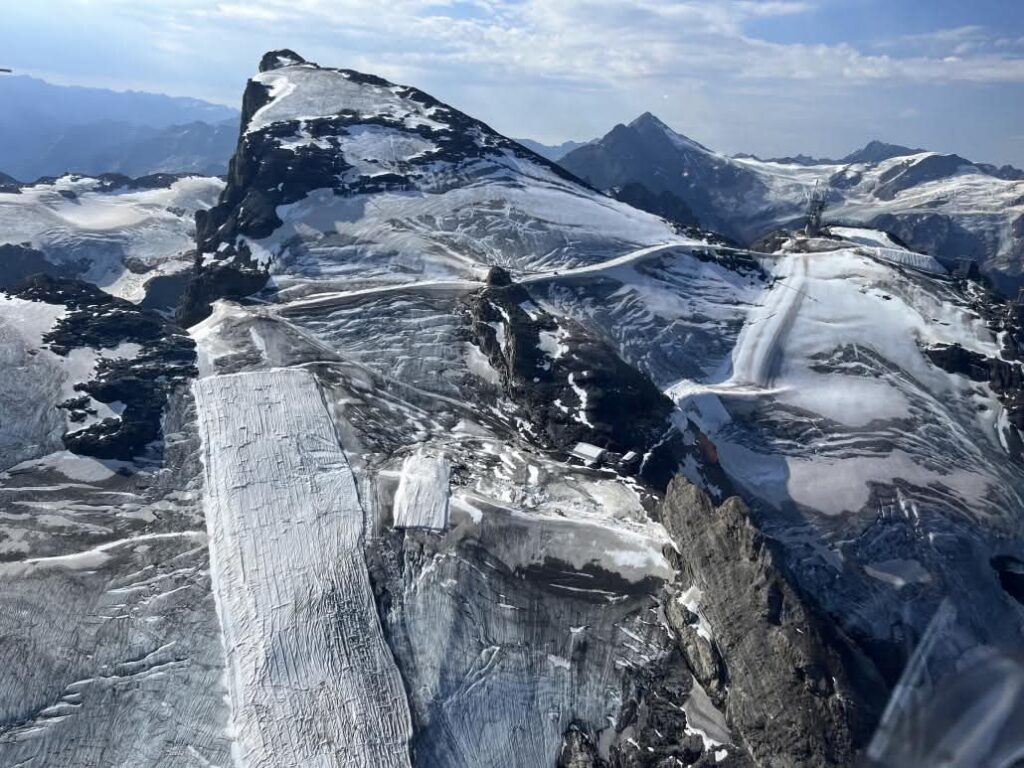
Hardly any peak in Central Switzerland has changed as much in recent decades as the Titlis. The retreat of the glaciers is clearly visible and changes the route anew each year.
While large parts of the west ridge were formerly glaciated, ascents today in late summer often take place over rock and scree. Those who visit the Titlis regularly experience the transformation of the Alps firsthand.
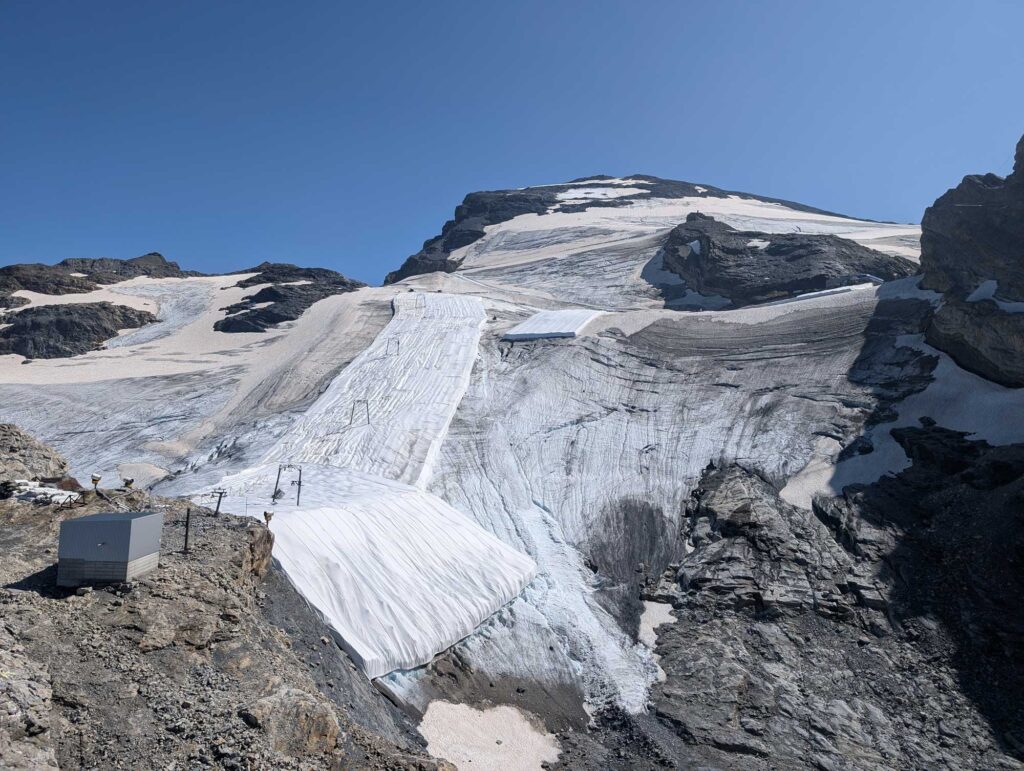
The protective fleece, which is laid out on parts of the glacier during the summer months, also has a significant impact on the conditions. As long as the fleece is in place, walking is often surprisingly easy and can even be done without crampons in some areas.
However, once the fleece is removed in autumn, the true condition of the glacier becomes apparent. Bare ice, crevasses, and icy passages can make the ascent significantly more challenging. Therefore, the conditions on the Titlis often differ more depending on the season than at many other high-alpine tour destinations in Central Switzerland.
My tip
Anyone wishing to avoid crowds should start early in the morning or choose a weekday. The tour is particularly impressive at sunrise, when the first rays of sun illuminate the glacier landscape around the Titlis.
Variations
A rewarding alternative starts at the Klein Titlis mountain station. This significantly shortens the tour and is also suitable for beginners in the world of high-altitude tours.
My review
Landscape ★★★☆☆ (will be better when construction is finished in 2030)
Adventure ★☆☆☆☆
Technical ★★☆☆☆
Condition ★★★☆☆
Ease of use ★★★★☆
Conclusion
The Gross Titlis is not a difficult high-altitude tour, but it is an impressive summit experience. The combination of glacier, three-thousander and views over the Central Swiss Alps makes it one of the classic high-altitude touring destinations around Engelberg.
Similar tours
- Rotstoeckli
- Tearing Bollards
- Rooster
- Gross Spannort
- Grass
Questions?
Are there still glaciers on the Titlis?
Yes. Several glacier remnants still exist on the Titlis, even though glacier retreat has been enormous in recent decades. Visible crevasse zones are still clearly visible, especially on the Galtiberg Glacier, in late summer and autumn – sometimes even directly next to the ski slope.
What's the deal with the fleece?
Until around mid-June, special fleece mats will be laid out on parts of the Titlis glacier. These reflect solar radiation and help to slow down the melting of the ice during the summer months.
As long as the fleece is in place, you can comfortably ascend parallel to the ski lift. However, as soon as the mats are removed in autumn, the terrain changes significantly. Ice patches and crevasses then often become visible, which is why crampons may be necessary depending on the conditions.
Is there still a glacier on the west ridge?
No. The former glacier on the west ridge has largely disappeared. In late summer and autumn, the ascent is mostly over rock, scree, and rubble to the summit.
Caution is still advised: Large cornices can form, especially on the south side, which must not be entered.
The best time of year for the Titlis depends on what you want to do. * **Winter (December to April):** This is the prime season for skiing and snowboarding. The snow conditions are usually excellent, and the slopes are open from the start of December to mid-April, weather permitting. * **Summer (June to October):** This is the best time for hiking and enjoying the panoramic views without the snow. The walking trails are open, and the warmer weather makes it pleasant for exploring the mountain. Titlis Cliff Walk is open year-round, but access may be affected by weather. The cable car operates year-round, so you can visit at any time, but your experience will be shaped by the season.
The classic season runs from June to October. In early summer, there is often still a lot of snow on the glacier. In late summer and autumn, however, the crevasse zones become more visible and the route can become more challenging.
Can one climb the Gross Titlis without a mountain guide?
Yes. In good conditions, the Gross Titlis can be climbed independently.
Especially the route from Klein Titlis via the west ridge is often an attractive alternative in late summer and autumn. When there is no snow, the ascent is mostly over rock, scree, and rubble and is technically relatively easy.
Nevertheless, the tour remains an alpine undertaking. Fog, ice, fresh snow, or cornices can significantly increase the difficulties. A realistic self-assessment and alpine experience are therefore a prerequisite.
Who is the tour suitable for?
The Gross Titlis is suitable for mountain hikers with good stamina and those new to high-altitude mountaineering. In good conditions, the route is technically easy. Nevertheless, snow, glaciers, and alpine dangers should not be underestimated.


