
Avalanche courses Engelberg
You can't understand avalanches with just a few rules. What matters is correctly bringing together terrain, conditions and information – and making good decisions as a result.
Avalanche courses for freeriders, ski tourers and snowshoers in Engelberg – practical and out in real terrain.

Which avalanche course is right for you?
Practical. Outdoors. Tailored to your level.
Whether you are a beginner, already have experience, or want to refresh and deepen your knowledge: The crucial thing is that the course matches your level and your sport.
Choose the course that suits you and your tours – from an introduction to avalanche awareness to realistic training for an emergency.
Avalanche Course BASIC – Freeride
Understand avalanches and apply decisions directly in the Engelberg-Titlis freeride area. Practical, outdoors and right in the middle of the terrain.
Enquire about BASIC Freeride
Avalanche Course BASIC – Ski Touring
From the avalanche bulletin to your own tracks. Learn to bring planning, terrain and conditions together on a real ski tour.
Enquire about a BASIC ski tour
Avalanche Course BASIC – Snowshoe
Recognising avalanche terrain, choosing sensible routes and better assessing decisions on the go.
Enquire about BASIC snowshoes
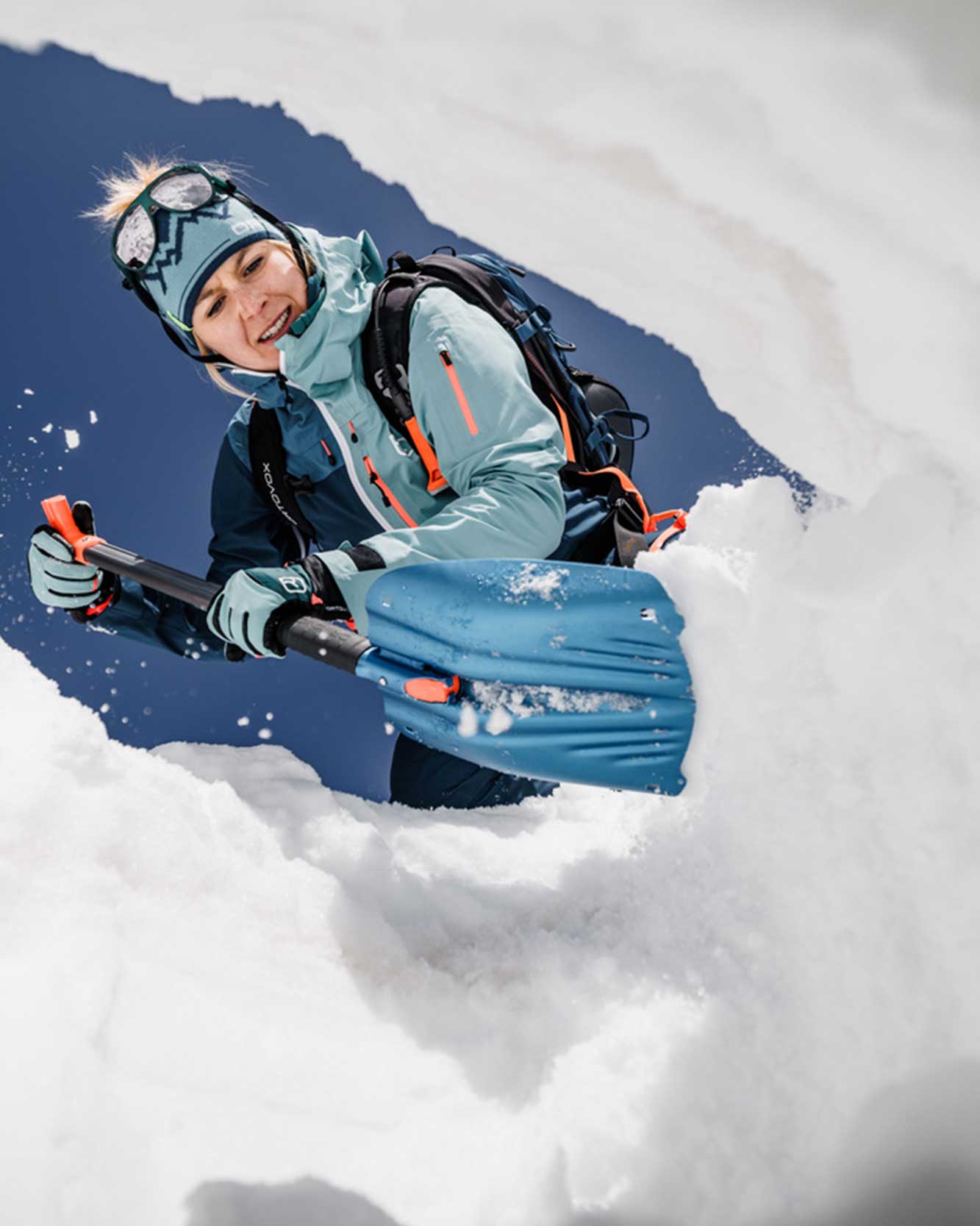
Avalanche rescue & transceiver training
Train for the real-life emergency where it can happen: in actual terrain, under time pressure and with realistic avalanche burial scenarios.
Train realistically
Pre-Season Camp Engelberg
Several days for anyone wanting to prepare comprehensively for the winter: avalanche prevention, companion rescue, ski technique, freeride and alpine skills.
Pre-Season CampWhat do you learn on an avalanche course?
CLEAR. Know what really matters outside.
A good avalanche course doesn't just teach rules. You learn to bring together information, terrain and conditions – and derive decisions for your tour from them.
Apply knowledge
GET OUT. Because avalanche knowledge belongs in the field.
Knowledge only becomes valuable when you can apply it out in the field. Discover freeride descents and ski tours around Engelberg – with information on terrain, conditions and planning.
Freeride Engelberg
Pistes, terrain and local information around Titlis and Engelberg.
Explore freeride →
Ski touring in Engelberg
Guided ski touring and tour ideas around Engelberg and the Uri Alps.
Discover ski touring →
Tour database
Route knowledge, tour descriptions and local information for your planning.
Discover tours →Practical avalanche knowledge
EXPERIENCED. Not just explaining, but applying it out in the field.
Experience is gained outside.
As a mountain guide, avalanche science accompanies me every winter – during freeriding, on ski tours and in training. That's why the course isn't about memorising as many rules as possible.
You should be able to understand what you observe, recognise connections and derive your own decisions from them.
Questions about the avalanche courses
CLEAR. So you know what to expect.
Which avalanche course is right for me?
That depends primarily on your experience and your sport. For beginners and as a refresher, there are the BASIC courses specifically for freeriding, ski touring or snowshoeing. If you already know the basics and above all want to practise for a real emergency, Companion Rescue & Avalanche Transceiver Training is the right choice.
Do I need prior knowledge for an avalanche course?
For the BASIC courses, you don't need any special prior knowledge of avalanche awareness. What is important is that you can move around in winter terrain with your chosen sport – freeriding, ski touring or snowshoeing. Any existing experience can be well refreshed and deepened during the course.
What do I learn in an avalanche course?
You will learn to understand the avalanche bulletin, recognise avalanche-prone terrain and assess conditions while on tour. This includes tour planning, decision-making in the field, the human factor and the use of avalanche transceivers, probes and shovels. The interaction of these factors is crucial.
What is the difference between freeride, ski touring and snowshoe avalanche courses?
The fundamentals of avalanche science are the same – but their application differs. In freeriding, the focus is on decisions in lift-assisted terrain and line choice. In ski touring, tour planning, the ascent track and the ongoing assessment of an entire route are added. In snowshoeing, we look at terrain and route choice specifically from the perspective of snowshoe tours.
Is transceiver training included in the avalanche course?
Yes. Knowing how to use an avalanche transceiver, probe and shovel is one of the fundamentals. Those who want to practise companion rescue more intensively can also take part in the special companion rescue and transceiver training. There we practise realistic scenarios out in the terrain and under time pressure.
How often should I practise buddy rescue?
I recommend practising companion rescue at least once every winter – regardless of experience level. Under stress, not only must transceiver search and probing function, but also strategic shovelling, group organisation and the subsequent steps after location.
Does the avalanche course take place in all weathers?
Winter weather is part of the training. However, whether and how a course takes place depends on the current snow, weather and avalanche conditions. Terrain and the daily schedule are adapted to the conditions and the training objective.
What equipment do I need for an avalanche course?
You need the winter equipment suitable for your sport as well as complete avalanche emergency equipment including a transceiver, probe and shovel. You will receive the exact equipment list with the information for the respective course.
Ready for your avalanche course in Engelberg?
GO. Knowledge is good. Applying it is better.
Choose a course that suits your sport and your current knowledge. If you're not sure which course is right for you, drop me a quick message – then we'll find the appropriate training.