

Freeride Avalanche Course Engelberg
Understanding avalanches. Making decisions outside.
Learning while we are on the move.
START. Practice instead of a rulebook.
Understand the avalanche bulletin, read the terrain and practise decision-making where it matters later: out in the Engelberg-Titlis freeride area.
Which aspect is right today? How steep is the slope? Where are the key sections – and which line offers a sensible alternative? In the BASIC freeride course, you will learn to assess such questions on the go and justify your decisions.

What are you learning?
UNDERSTAND. Then decide for yourself.
avalanche report
correctly reading danger level, avalanche problem, aspect and elevation – and applying them to our day.
Terrain & line choice
Recognising slope gradient, terrain features and key spots, and choosing sensible lines and alternatives.
Decide
Categorise observations on the go, determine intervals and group tactics, and adapt plans.
Avalanche transceiver, probe & shovel
Use safety equipment correctly and refresh the basics of companion rescue.
Dates
COUNT ME IN. Choose the date that suits you.

BASIC courses by Engelberg Mountain Guide
A large part of the published BASIC avalanche courses are run by Engelberg Mountain Guide. This is a standard product; which mountain guide will lead the respective course is not necessarily known in advance.
Highlighted in gold = personal with Dani
I personally lead gold-highlighted dates in the calendar or organise them directly.
Individual pre-season days also possible
You do not necessarily have to visit the whole camp. Depending on the programme, you can also take part in a single training day – for example, for advanced comrade rescue and avalanche transceiver training. These dates will be marked with the pre-season camp logo in the calendar in future.
View Pre-Season Camp →
Show all avalanche course dates
Open all currently published dates
Included
- Organisation and implementation
- Guide's expenses
- IFMGA mountain guide or mountain guide aspirant
- Theory materials / Booklet
Exclusive
- Ski pass
- Arrival
- Lunch

How does the avalanche course work?
LOS. Learning while we're on the move.
Meeting point in Engelberg. Equipment check, avalanche bulletin, weather and current conditions.
Assess slope angle, aspect, terrain features, crucial spots and line choice directly out in the field.
Lunch in a restaurant or on your own – depending on the area, circumstances and daily schedule.
Further practical field training, justifying your own decisions and conclusion of the course day in Engelberg.

Get out.
Because avalanche knowledge belongs in the field.
We do not spend the course day in the classroom. We freeride, observe, discuss and make decisions where they are actually relevant.

Know the terrain. Apply your knowledge.
DISCOVER. But don't consume blindly.
Those who know the terrain can better contextualise decisions. In the freeride touring database, you will find routes, variations and background knowledge about Engelberg.
Freeride tour database
A day is good.
The complete package is better.
At the Pre-Season Camp, we combine avalanche prevention, companion rescue, freeriding, ski touring, alpine skills and skiing technique into a comprehensive preparation for the winter.
Depending on the programme, participation in a single training day is also possible.
What's included?
READY. So that we can learn outside.
Missing equipment can be hired in Engelberg.
rental equipmentFreeride & Clothing
- Freeride ski / Ski or snowboard
- Ski or snowboard boots
- Ski poles with skis
- Helmet and ski goggles
- Warm winter clothing
- Gloves
- Sunglasses & sun cream
Security & Rucksack
- LVS
- Probe
- Shovel
- Rucksack approx. 25–30 litres
- snack
- Drink
Meeting point Engelberg.
08:15. Easily accessible by public transport and car.
By train
The matching train connection arrives in Engelberg each time at 07:53.That leaves plenty of time until the gathering at 08:15.
By car
The easiest place to park is at the railway station or in the village car park near the monastery. Depending on the car park, it's about CHF 5.– to 10.– per day.
The grounds are our classroom.
LEARN. Don't just memorise rules.
Avalanche science becomes interesting when observations, terrain and decisions come together. That is precisely why the course takes place outdoors.
Discover mountain knowledge →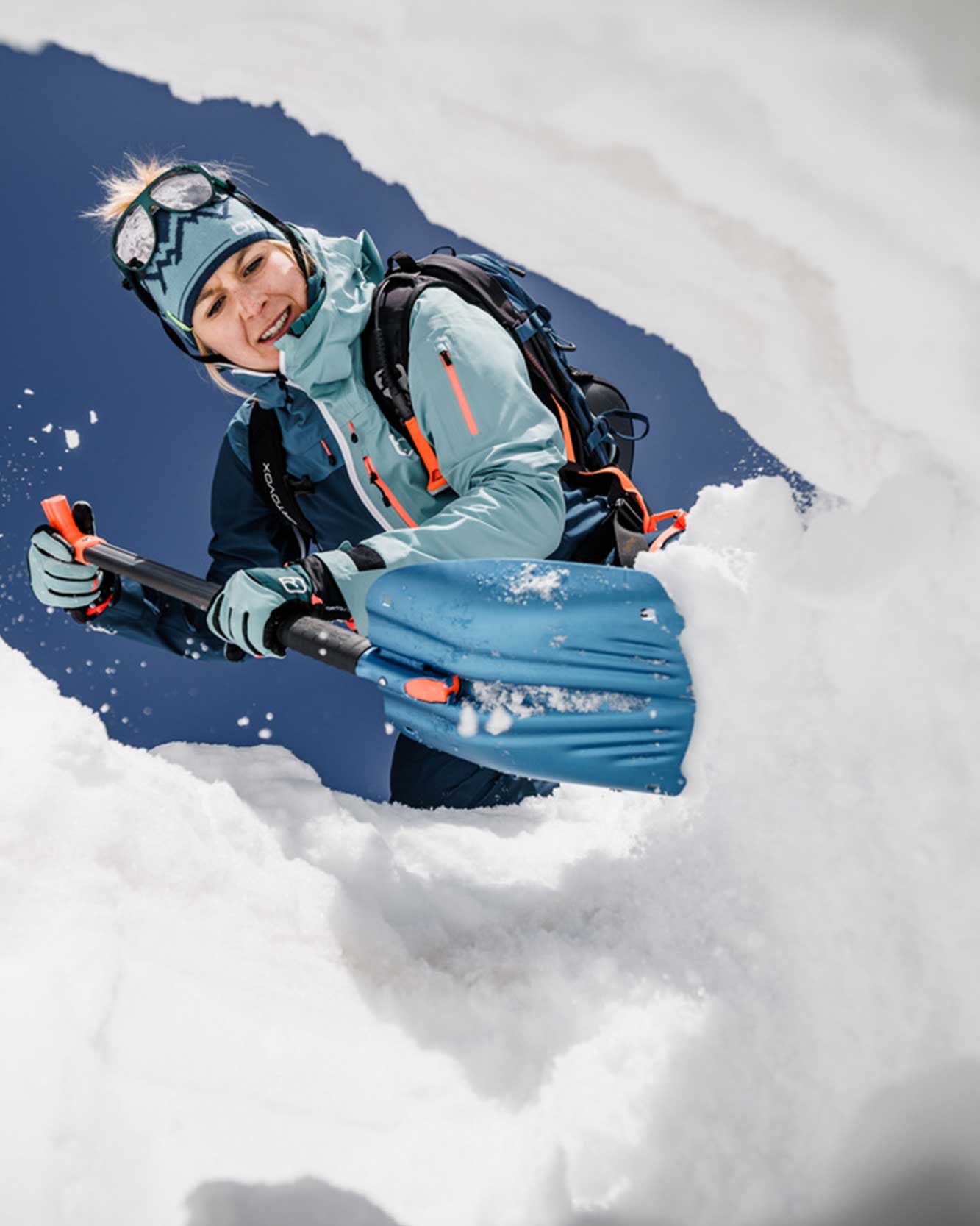
Experience is gained outside.
EXPERIENCED. Not just explaining, but applying.
As a mountain guide, avalanche awareness accompanies me every winter – while freeriding, on ski tours and during training.
The course isn't about memorising as many rules as possible. You should understand what you observe, recognise connections and be able to derive your own decisions from them.
Dani Perret
IFMGA Mountain Guide · Engelberg
What comes next?
CONTINUE. Depending on where you are travelling.
Deepen your avalanche knowledge on a ski tour, practise rescue realistically or prepare comprehensively for the winter over several days.
Avalanche course for ski tourers
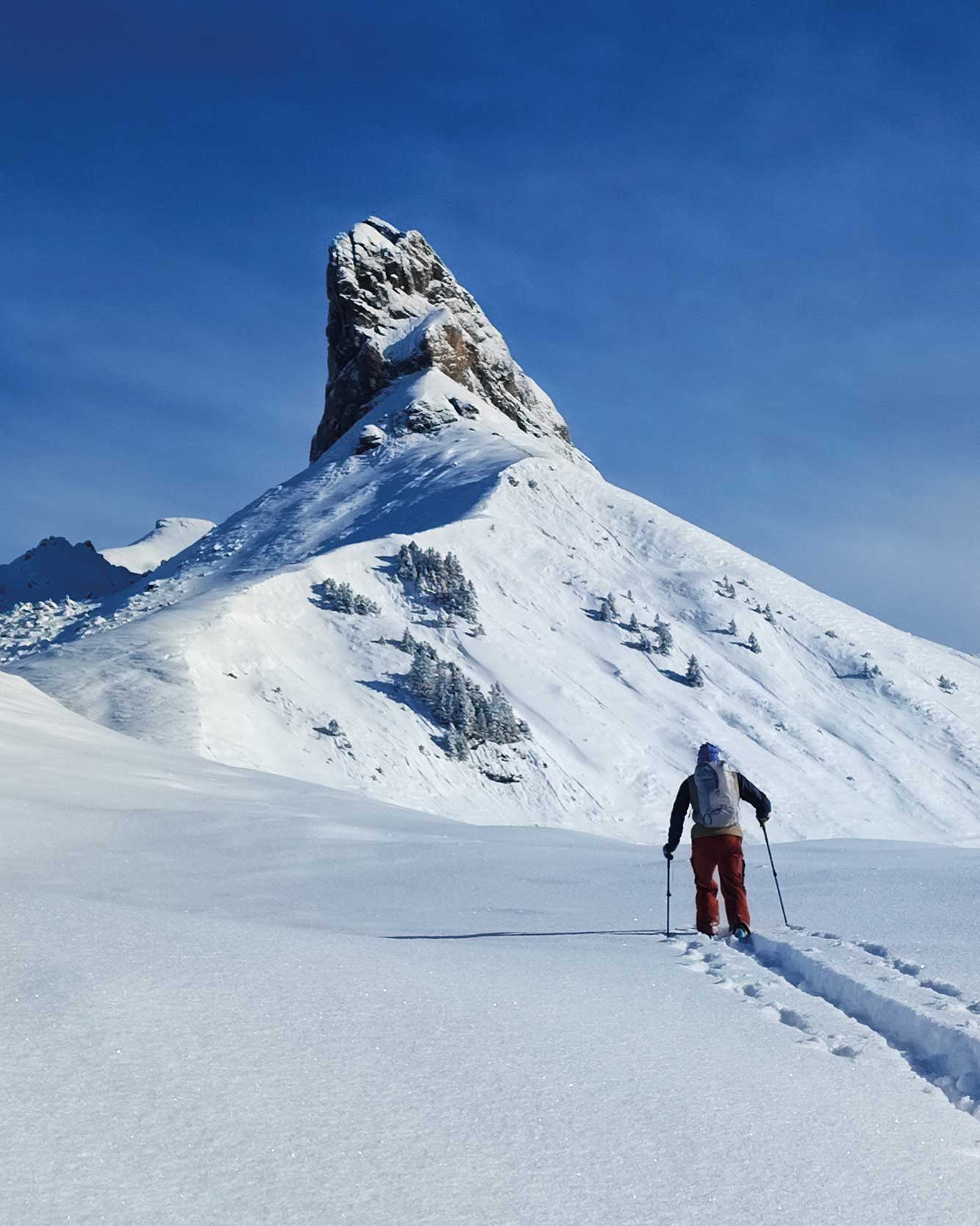
Plan a tour, assess terrain and apply decisions on a real ski tour.
Ski touring courseIntensive Avalanche Transceiver Training
Search, probe and shovel under time pressure – with realistic burial scenarios.
LVS Training →
THE COMPLETE WINTER TRAINING
Pre-Season Camp
Avalanche awareness, rescue, freeride, ski touring and ski technique as a complete package.
Explore camp →Questions about the freeride avalanche course
CLEAR. So you know what to expect.
Who is the BASIC freeride course suitable for?
For beginners and those looking for a refresher who want to venture off-piste and better understand avalanche danger, terrain and decision-making.
Do I already need off-piste experience?
You should be a confident skier or snowboarder and generally be able to move around in off-piste terrain. Special prior knowledge of avalanche awareness is not required for the BASIC course.
Is the avalanche course also suitable for snowboarders?
Yes. The course is aimed at freeriders with skis and snowboards.
Can the course be held in English?
Yes, the avalanche course can also be conducted in English depending on the group.
Does the course still take place in bad weather?
The programme is adapted to the weather, snow conditions and current conditions. Changing conditions in particular often provide valuable situations for training.
When will I receive the meeting point and final information?
You will receive the final organisational information and details regarding the meeting point before the course day. The gathering is generally scheduled for 08:15 in Engelberg.
Which ski pass do I need?
Which ticket is appropriate depends on the daily schedule and current conditions. You will receive the relevant information before the course.
What safety equipment do I need?
You need an avalanche transceiver, a probe and a shovel, as well as a suitable backpack. On top of that comes your normal ski or snowboard equipment.
Can missing material be hired?
Yes. Missing equipment can be hired in Engelberg.
View hire equipment →Does buddy rescue form part of the BASIC course?
The basics of avalanche transceiver, probe, shovel and companion rescue are part of the topic. If you want to practise the rescue procedure in a targeted way and under realistic conditions, the avalanche transceiver intensive search is the more suitable specialisation.
BASIC course or pre-season camp?
The BASIC course is ideal for a compact introduction or a one-day refresher. The Pre-Season Camp goes significantly further and combines avalanche knowledge, rescue, freeride, ski touring, alpine skills and ski technique over multiple training days.
How much does the avalanche course cost?
The BASIC Freeride Avalanche Course costs CHF 195.– per person. Ski pass, travel and lunch are not included in the course price.

Ready for better decisions?
OUT. Applying knowledge, instead of just talking about it.


