
Natural hazards Engelberg
Natural hazards EngelbergAvalanches, rockfalls, landslides and erosion shape the mountain region. Protection forests and engineering structures help to safeguard people, paths and settlements from the consequences of these natural processes.
Avalanches in Engelberg
Snow is not simply snow. A snowpack consists of different layers that are constantly changing.
Wind, fresh snow, temperature and the characteristics of the individual snow layers help determine how stable a snowpack is. If the load becomes greater than the strength of a weak layer, an avalanche can trigger.
In mountainous areas, avalanches are among the most significant natural hazards. They can affect transport routes, buildings and entire terrain depressions.
Understand the avalanche bulletin, assess the terrain and make better decisions outdoors.
To the avalanche course →
Stone chip
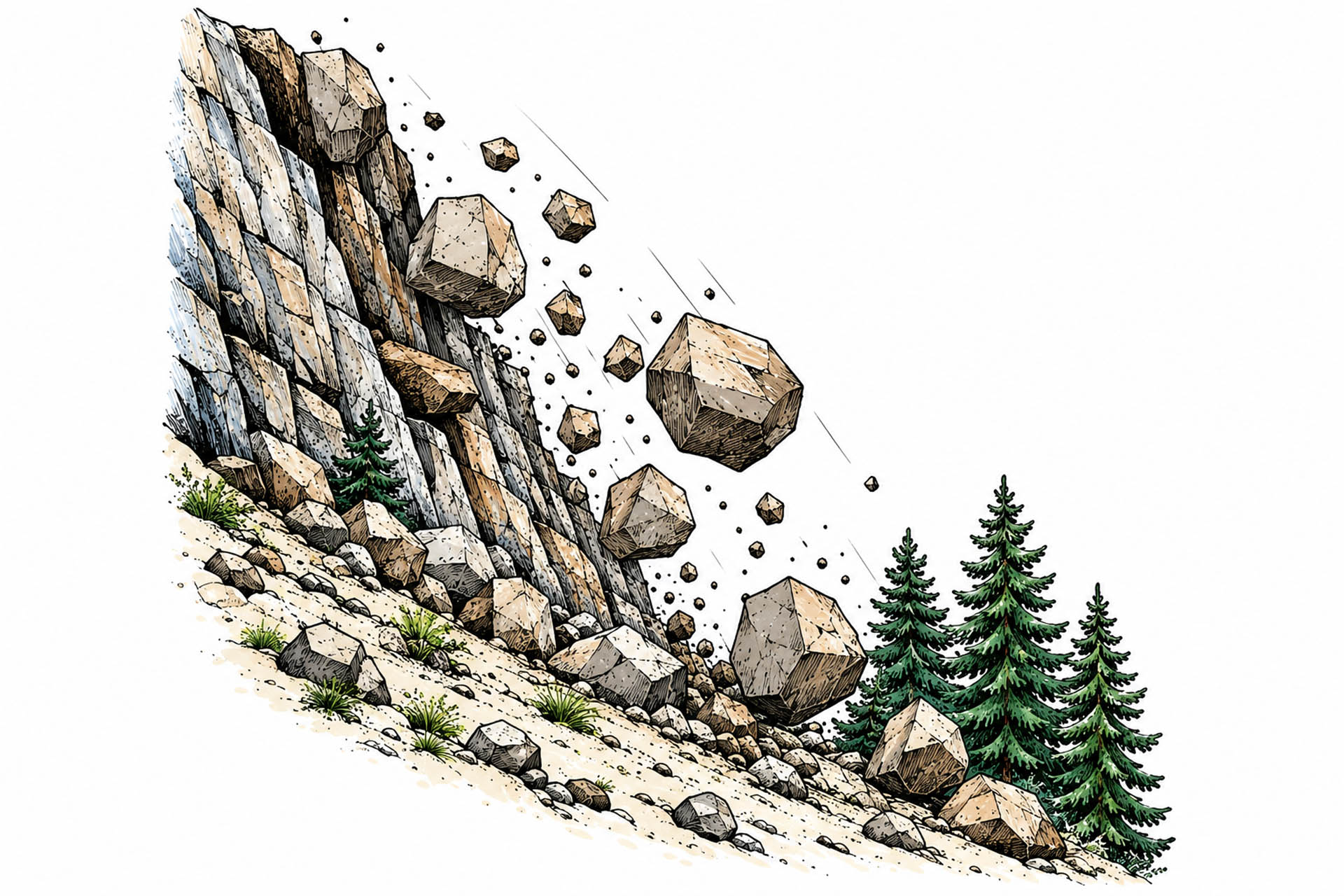
Rock is constantly in motion – even if we mostly barely perceive this change.
Water penetrates cracks. If it freezes, it expands. Repeated cycles of freezing and thawing can thus detach rock. Heavy rainfall, temperature changes and weathering also influence the stability of a rock face.
Dislodged rocks can bounce, roll or fall. How far they travel depends on size, shape, speed and terrain.
Water in rock crevices can develop significant pressure when freezing. Over many freeze-thaw cycles, the rock is loosened.
Landslides & Erosion
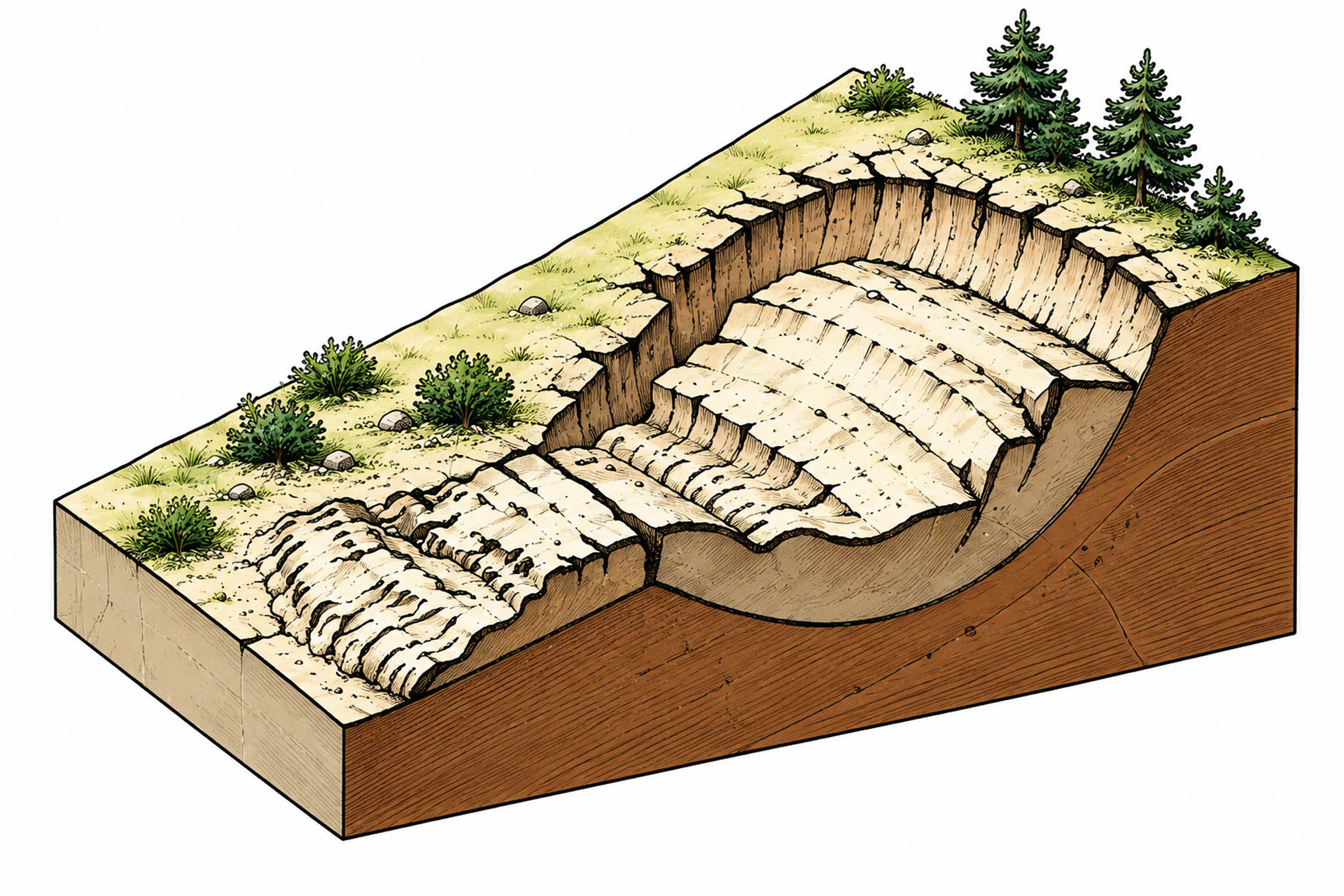
Water can fundamentally change a slope.
If a lot of water infiltrates the soil, its weight increases. At the same time, the friction and cohesion within the subsurface can change. As a result, entire masses of soil and rock can slide downslope slowly or suddenly.
Erosion usually looks less spectacular. Water continuously washes away soil and loose material. Over a longer period of time, rills, ditches, and new landforms are created.
protection forest
A stable mountain forest is one of the most important natural protection systems in the Alpine region.
Trees and their roots stabilise the soil. Vegetation influences the hydrological balance and reduces erosion. In the event of rockfalls, tree trunks can slow down or stop falling rocks.
The forest also affects the snow cover. Tree crowns hold back some of the snow, while trunks and various terrain features break up the snow cover.
That is why protection forest is specifically tended and rejuvenated. Different tree species and age classes increase its stability.

obstructions
Where natural protection is not sufficient, technical protective measures are used.
Avalanche protection structures stabilise the snowpack right in the release area. Rockfall nets and dams can catch rocks or reduce their energy. Other structures safely divert water, sediment or debris flows in a controlled manner.
Which measure is appropriate depends on the specific natural hazard, the terrain and the areas to be protected.

Natural hazards Engelberg: The interaction
Natural hazards cannot be switched off. What is crucial is to recognise hazards, use space properly and protect where it is necessary.
Terrain, geology, snow, water and weather determine which processes can occur.
Hazard maps help to decide where building can take place and where special protective measures are necessary.
Protection forests, engineering structures, monitoring and organisational measures complement each other.
Natural hazards in the Brunni area
Those who walk through the mountains move through a landscape that is constantly changing.
The examples on the Brunni show how avalanches, rockfall, landslides and erosion occur – and how protection forests and engineering measures help to reduce the consequences of these processes.
Natural hazards are part of the mountains. Preventing them entirely is neither possible nor the goal. What is crucial is to understand the processes and deal with them responsibly.
More about natural hazards
Further information on avalanches, protection forests and natural hazards in Switzerland can be found at the relevant specialist bodies.


